
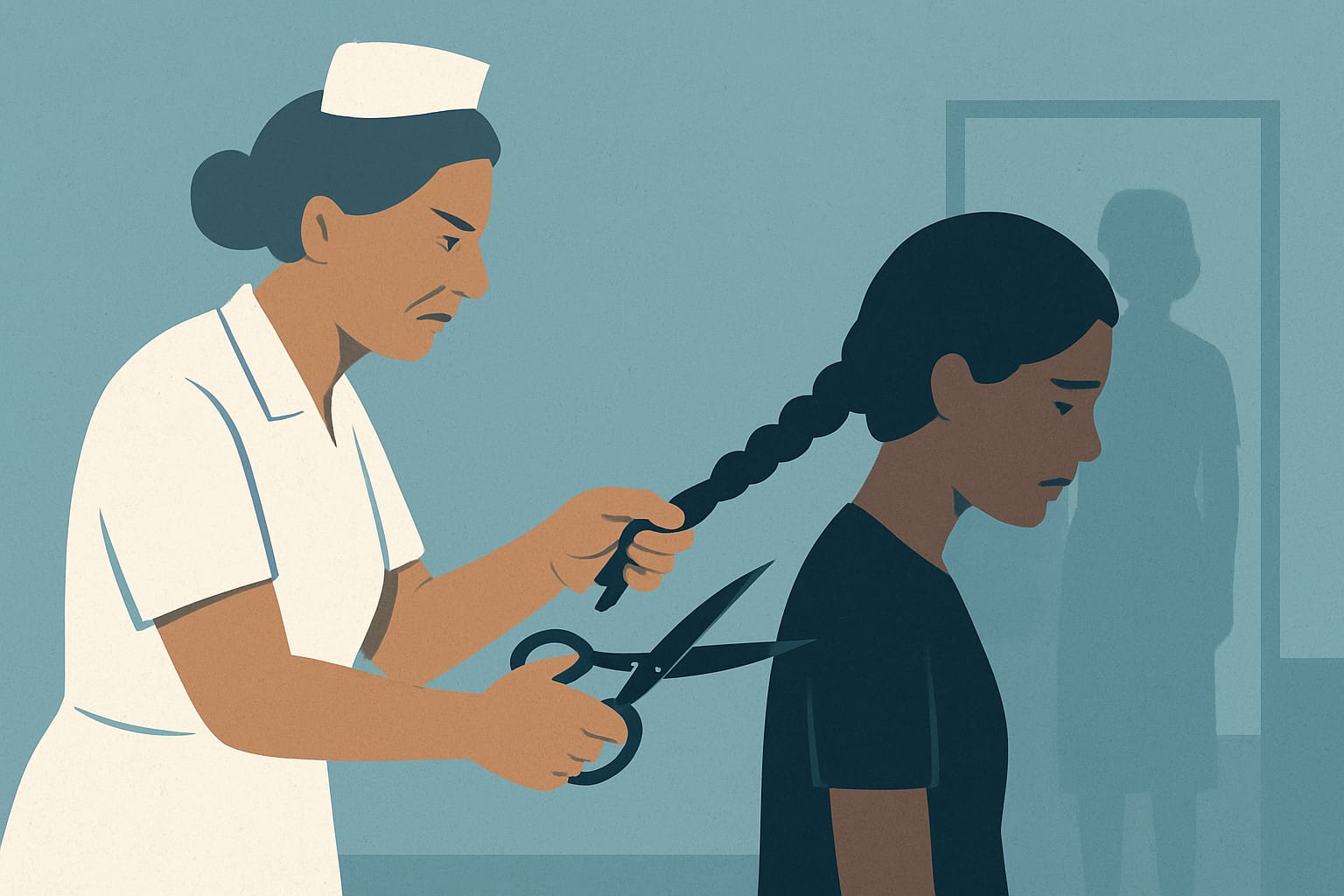
A Matron Caught on Camera Cutting a Nursing Student’s Braids During Internship Sparks Outrage
A disturbing video has been circulating online showing a matron cutting off a nursing student’s braids during her internship. The clip, which has stirred strong reactions on social media, captures a moment many viewers describe as humiliating, unprofessional, and entirely avoidable.
According to reports, the student arrived for her clinical duties with neatly styled braids, but the matron insisted they were “inappropriate” for the ward. Instead of asking her to adjust her hairstyle or giving her time to meet the facility’s grooming standards, the matron took matters into her own hands—literally. The video shows her using scissors to cut sections of the student’s braids while other staff members watch.
For many, the issue goes beyond hairstyle regulations. The incident has raised concerns about respect, dignity, and the treatment of interns who are often young, inexperienced, and eager to learn. Viewers argue that a simple conversation could have resolved the matter without embarrassing the student or damaging her hair.
Healthcare workers and former nursing trainees have also joined the discussion, sharing their own experiences with strict dress codes and the power imbalance between interns and senior staff. While most agree that professionalism in healthcare is vital, many believe that enforcing rules should never involve degrading or violating someone’s personal autonomy.
The video has also sparked debate about the need for updated grooming policies that respect cultural hairstyles, especially braids, locks, and protective styles commonly worn by African women. Critics say it’s time for institutions to recognise these styles as neat and professional, rather than singling them out.
As the video continues to circulate, many are calling for nursing authorities and hospital management to investigate the incident and take appropriate action. People seek accountability—not just for the act itself but for the system that permits such behaviour.
What should have been a straightforward internship experience has now become a national conversation about respect, professionalism, and the treatment of students in the healthcare sector. The hope is that this moment prompts better guidelines, improved training, and above all, greater humanity within our institutions.
/p>

COMMENTS